BLUF First: The Fastest Way to Clearer Conversations

The Key Point
If conversations often feel longer, harder, or more exhausting than they need to be, the problem usually isn’t the topic—it’s the lack of clarity upfront. In this post, I’ll share a simple communication approach that helps people stop guessing, listen better, and get to the point faster.
Clearer conversations don’t require more words—just the right ones, said first.
One of the most exhausting things in a conversation is this:
You’re listening, but you can’t quite figure out where the other person is coming from. You find yourself asking:
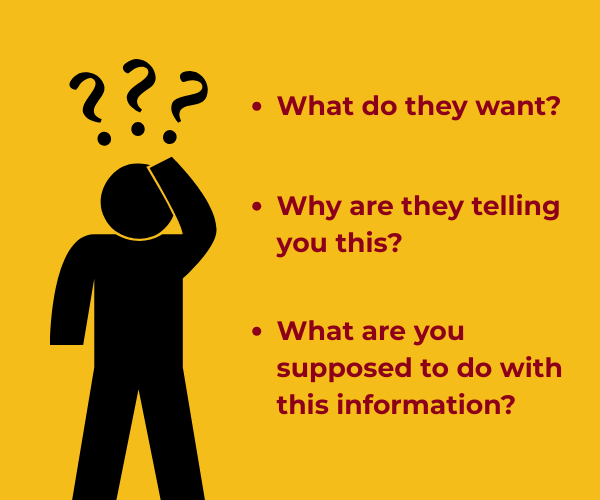
So you start guessing.
And when guessing shows up, mental elephants enter the conversation—distractions, assumptions, and unnecessary stress that slow everything down. They are the invisible weight we carry into conversations when expectations aren’t clear and nothing feels simple.
If you want to get to the point faster in conversations—or help other people do it—there’s a simple communication approach worth using. It’s called, BLUF.
What BLUF Means (and Why It Works)
BLUF: Bottom Line Up Front.
Mike Campbell, one of my amazing linkedin connections, shared a post about it. BLUF is a concept often used in U.S. military communication. The idea is simple:
Share the most important information first so people can make decisions more quickly.

Instead of warming up to the point—or hoping the other person figures it out—you lead with clarity. And while BLUF may sound formal, it works incredibly well in everyday conversations at work, at home, and everywhere in between.
The Three Mental Elephants BLUF Helps Remove
Most unclear conversations trigger the same three unspoken questions. BLUF helps answer them early.
1. Why are you telling me this?
When the purpose of a conversation isn’t clear, people start guessing.
BLUF solution:Lead with your purpose.
Instead of saying,
“I just wanted to check in…”
Try being more specific:
“I wanted to check in about your frustration.”
“I wanted to talk about the efficiency of this process.”
“I wanted to follow up on your excitement about the project.”
Clarity about purpose gives the conversation direction from the start.
2. What do you want from me?
People listen differently depending on what’s being asked of them—but only if they know what that is.
BLUF solution:Say the ask early.
You might say:
“I’d like your ideas.”
“I just need to talk this through.”
“I’m not looking for solutions—just a listening ear.”
When people know what you want from them, they know how to listen. For a deeper dive into how to listen when people are talking, check out my blog post on Strong Leaders.
3. How urgent is this?
Without context, everything can feel urgent—or frustratingly vague.
BLUF solution:Set expectations.
That could sound like:
“No action needed—just sharing information.”
“We need a decision today.”
“Let’s revisit this next week.”
Urgency clarity helps people know how much energy to give to the conversation and what happens next.
Why BLUF Makes Conversations Easier for Everyone
When you don’t put the bottom line up front, people are left guessing. And guessing is exhausting, for them and for you.

When you lead with what matters most:
Conversations become clearer
Decisions happen faster
Frustration decreases
Trust increases
BLUF doesn’t make conversations colder or more abrupt.
It makes them kinder by respecting people’s mental bandwidth.
Clear communication isn’t about saying more.
It’s about saying the right thing first.
Where could you put the bottom line up front in more conversations?